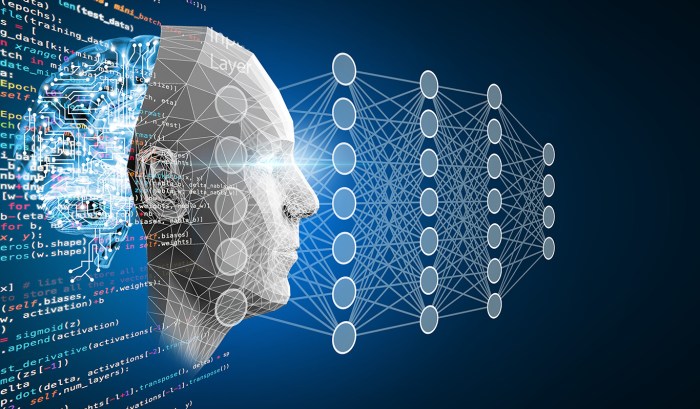
Embark on a journey delving into the intricate world of Machine Learning and Data Analytics, where cutting-edge technologies converge to revolutionize data interpretation and decision-making processes.
Unveil the complexities of machine learning algorithms and their pivotal role in optimizing data analytics outcomes.
Machine Learning and Data Analytics
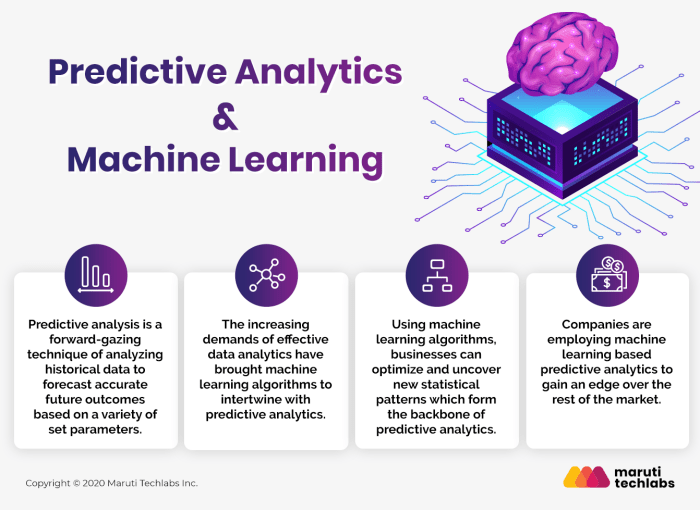
Machine learning and data analytics are closely intertwined fields that work together to extract valuable insights from large datasets. Data analytics involves the process of examining, cleaning, transforming, and modeling data to uncover trends, patterns, and correlations. Machine learning, on the other hand, is a subset of artificial intelligence that focuses on developing algorithms and statistical models that enable computers to learn from and make predictions or decisions based on data.
Examples of Machine Learning in Data Analytics
- Classification algorithms like logistic regression and decision trees are used in data analytics to categorize data into different classes based on features.
- Clustering algorithms such as k-means clustering help identify natural groupings or clusters in datasets, aiding in segmentation and pattern recognition.
- Recommendation systems, powered by machine learning, analyze user behavior and preferences to suggest relevant products or content.
Importance of Machine Learning in Enhancing Data Analytics Processes
Machine learning plays a crucial role in enhancing data analytics processes by automating predictive modeling, enabling faster and more accurate insights extraction. By leveraging machine learning algorithms, data analysts can handle large and complex datasets more efficiently, uncovering hidden patterns and relationships that might not be apparent through traditional analytics techniques. Additionally, machine learning enables the development of personalized recommendations, predictive maintenance models, fraud detection systems, and other advanced analytics applications that drive business value and innovation.
Machine Learning Algorithms
Machine learning algorithms play a crucial role in data analytics by enabling systems to learn from data and make predictions or decisions. These algorithms can be broadly classified into supervised and unsupervised learning methods.
Supervised Machine Learning Algorithms
Supervised machine learning algorithms are trained on labeled data, where the input and output are provided during the training phase. These algorithms learn to map inputs to outputs based on the given data. Examples of supervised machine learning algorithms include:
- Linear Regression: Used for predicting continuous values, such as predicting house prices based on features like area, location, etc.
- Decision Trees: Used for classification and regression tasks, such as predicting whether a customer will buy a product based on their demographic information.
- Support Vector Machines (SVM): Used for classification tasks, such as classifying emails as spam or non-spam.
Unsupervised Machine Learning Algorithms
Unsupervised machine learning algorithms work on unlabeled data, where the system tries to find patterns or relationships in the data without explicit supervision. Examples of unsupervised machine learning algorithms include:
- K-means Clustering: Used for grouping similar data points together, such as clustering customers based on their purchasing behavior.
- Principal Component Analysis (PCA): Used for dimensionality reduction, such as reducing the number of features while retaining important information in the data.
- Association Rule Mining: Used for finding interesting relationships between variables in a dataset, such as identifying products that are frequently bought together.
Real-World Applications
Machine learning algorithms are utilized in various real-world applications to extract insights and make informed decisions. Some examples include:
- Healthcare: Supervised learning algorithms are used for diagnosing diseases based on medical images, while unsupervised learning algorithms help in patient segmentation for personalized treatment.
- Finance: Supervised algorithms are employed for credit scoring, fraud detection, and stock price prediction, while unsupervised algorithms aid in market segmentation and anomaly detection.
- E-commerce: Machine learning algorithms power recommendation systems by analyzing user behavior and preferences to suggest relevant products, increasing customer engagement and sales.
Data Preprocessing for Machine Learning
When it comes to machine learning and data analytics, data preprocessing plays a crucial role in ensuring the accuracy and effectiveness of the models. It involves cleaning, transforming, and organizing the raw data before feeding it into machine learning algorithms.
Significance of Data Preprocessing
Data preprocessing is essential because it helps in dealing with noisy, incomplete, or inconsistent data, which can negatively impact the performance of machine learning models. By preprocessing the data, we can improve the quality of the dataset and enhance the overall results of the analysis.
Steps in Data Preprocessing
- 1. Data Cleaning: Removing irrelevant or duplicate data points, handling missing values, and correcting errors in the dataset.
- 2. Data Transformation: Normalizing or scaling numerical features, encoding categorical variables, and creating new features through feature engineering.
- 3. Data Reduction: Reducing the dimensionality of the dataset through techniques like PCA (Principal Component Analysis) or feature selection methods.
Challenges in Data Preprocessing
- 1. Missing Data: Dealing with missing values in the dataset can be challenging as it may require imputation techniques or dropping certain observations.
- 2. Outliers: Identifying and handling outliers in the data is crucial to prevent them from influencing the model’s performance.
- 3. Data Scaling: Ensuring that all features are on a similar scale to prevent bias towards certain variables during model training.
Cybersecurity Solutions and Data Analytics
Data analytics plays a crucial role in enhancing cybersecurity measures by providing insights into potential threats and vulnerabilities. By analyzing large volumes of data, organizations can detect and prevent cyber attacks more effectively.
Intersection of Cybersecurity Solutions and Data Analytics
- Data analytics can be used to identify patterns and anomalies in network traffic that may indicate a security breach.
- Machine learning algorithms can analyze historical data to predict future cyber threats and proactively implement preventive measures.
- Behavioral analytics can help in identifying unusual user activity that could be a sign of unauthorized access or insider threats.
Data Analytics Techniques in Cybersecurity
- Log Analysis: By analyzing log data from various systems and applications, organizations can identify suspicious activities and potential security incidents.
- Malware Analysis: Data analytics can help in analyzing the behavior of malware to develop effective countermeasures and prevent future attacks.
- Threat Intelligence: By leveraging threat intelligence feeds and analyzing them using data analytics, organizations can stay updated on the latest cyber threats and take proactive measures to mitigate risks.
Concluding our exploration, Machine Learning and Data Analytics stand as indispensable tools in the realm of data-driven insights, promising a future where information is harnessed with unprecedented precision and efficiency.
Answers to Common Questions
How are machine learning and data analytics intertwined?
Machine learning drives data analytics by enabling data interpretation, pattern identification, and predictive modeling.
What distinguishes supervised and unsupervised machine learning algorithms?
Supervised algorithms require labeled data for training, while unsupervised algorithms uncover patterns independently without predefined labels.
Why is data preprocessing crucial for machine learning and data analytics?
Data preprocessing ensures data quality, addresses inconsistencies, and enhances the performance of machine learning models.