Dive into the world of Multi-Factor Authentication Solutions, where security meets innovation. Learn about the importance of utilizing multiple layers of security for enhanced protection in an ever-evolving digital landscape.
Explore the different types of authentication methods, the implementation process, benefits, and its role in cybersecurity solutions to stay ahead of potential threats.
Overview of Multi-Factor Authentication Solutions
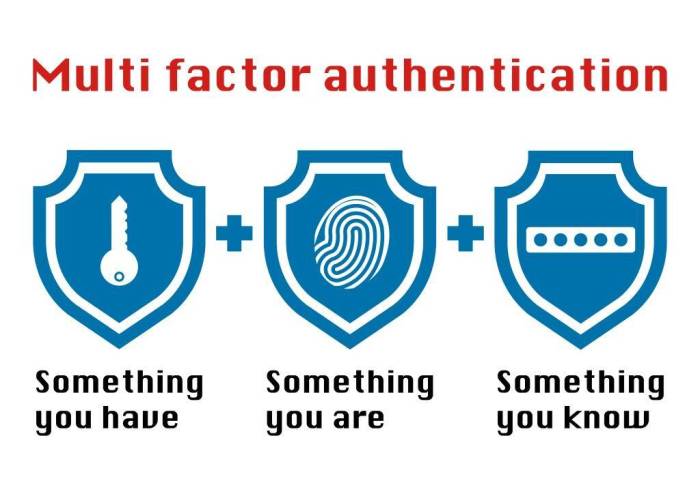
Multi-factor authentication (MFA) is a security process that requires users to provide two or more verification factors to gain access to a system. These factors can include something the user knows (like a password), something the user has (like a smartphone or token), or something the user is (like a fingerprint or face scan). By combining multiple factors, MFA enhances security by making it more difficult for unauthorized users to access sensitive information.
Importance of Using Multi-Factor Authentication Solutions
Using multi-factor authentication solutions is crucial in today’s digital landscape where cyber threats are constantly evolving. MFA adds an extra layer of security beyond just passwords, reducing the risk of unauthorized access even if passwords are compromised. This helps protect sensitive data, personal information, financial transactions, and other critical assets from cyber attacks.
Factors Involved in Multi-Factor Authentication
- Something the user knows: This can be a password, PIN, security question, or any other knowledge-based information.
- Something the user has: This includes a smartphone, token, smart card, or any physical device that the user possesses.
- Something the user is: Biometric factors such as fingerprints, facial recognition, voice patterns, or iris scans fall under this category.
Examples of Industries Where Multi-Factor Authentication Solutions are Crucial
- Financial Services: Banks, investment firms, and other financial institutions use MFA to secure online banking, transactions, and customer accounts.
- Healthcare: Hospitals, clinics, and healthcare providers implement MFA to protect patient records, medical information, and compliance with data privacy regulations.
- Government Agencies: Federal, state, and local government entities rely on MFA to safeguard sensitive data, citizen information, and critical infrastructure.
Types of Multi-Factor Authentication Methods

Multi-factor authentication (MFA) involves using multiple methods to verify a user’s identity, enhancing security beyond just a password. Different types of authentication methods offer varying levels of security and convenience. Let’s explore some common types of MFA methods along with their strengths, weaknesses, and real-world examples.
Biometrics
Biometric authentication uses physical characteristics such as fingerprints, facial recognition, or iris scans to verify identity. This method is highly secure as it is difficult to replicate or fake biometric data. Companies like Apple with Face ID and Samsung with their fingerprint scanner on smartphones utilize biometric authentication to enhance security for users. However, biometric data can be compromised in data breaches, and there are concerns regarding privacy and data protection.
SMS Codes
SMS codes involve sending a one-time code to a user’s mobile device, which they must enter along with their password to access an account. This method is widely used due to its simplicity and widespread availability. Companies like Google use SMS codes as part of their two-factor authentication process. However, SMS codes can be intercepted through SIM swapping attacks or phishing scams, making them less secure compared to other methods.
Security Keys
Security keys are physical devices that users plug into their computers or mobile devices to authenticate their identity. These keys generate unique codes for each login attempt, adding an extra layer of security. Companies like Yubico and Google offer security keys for users to enhance account security. Security keys are highly secure against phishing attacks but may not be as convenient as other methods due to the need for a physical device.
Push Notifications
Push notifications send a prompt to a user’s mobile device asking them to approve or deny a login attempt. This method offers a balance between security and convenience, as users can easily verify their identity with a single tap. Companies like Microsoft with their Authenticator app use push notifications for multi-factor authentication. However, users must have a stable internet connection to receive push notifications, which can be a drawback in certain situations.
Implementation of Multi-Factor Authentication Solutions
Implementing multi-factor authentication for an organization involves several key steps to ensure a secure and seamless deployment. It is essential to follow best practices and address common challenges to successfully integrate multi-factor authentication across different platforms.
Steps for Implementing Multi-Factor Authentication
- Evaluate the current security infrastructure and identify areas where multi-factor authentication can be implemented for maximum impact.
- Choose the appropriate multi-factor authentication methods based on the organization’s security needs and user requirements.
- Integrate multi-factor authentication into existing systems and applications, ensuring compatibility and minimal disruption to workflows.
- Train employees on how to use multi-factor authentication effectively and educate them on the importance of securing their accounts.
- Regularly monitor and update the multi-factor authentication system to address any vulnerabilities and ensure continued protection against threats.
Best Practices for Deploying Multi-Factor Authentication
- Implement a risk-based approach to determine when and where multi-factor authentication is required based on the sensitivity of the data or transaction.
- Utilize adaptive authentication to adjust the level of security based on the user’s behavior, location, or device, providing a seamless user experience while maintaining security.
- Enable self-service options for users to manage their multi-factor authentication settings and recovery options, reducing the burden on IT support.
- Regularly review and update the multi-factor authentication policies to align with evolving security threats and industry standards.
Common Challenges and Solutions
- Resistance from users: Address user concerns by emphasizing the benefits of multi-factor authentication, providing clear instructions, and offering support during the transition.
- Integration complexities: Work closely with vendors and IT teams to ensure seamless integration with existing systems and applications, and conduct thorough testing before full deployment.
- Compliance requirements: Stay informed about regulatory requirements and industry standards to ensure that the multi-factor authentication solution meets all necessary compliance standards.
Benefits of Multi-Factor Authentication Solutions
Multi-factor authentication (MFA) offers several advantages over traditional password-only systems, significantly enhancing security measures and protecting against various cyber threats.
Enhanced Security
Multi-factor authentication adds an extra layer of security by requiring users to provide multiple forms of verification before accessing their accounts. This significantly reduces the risk of unauthorized access, as even if one factor is compromised, the attacker would still need the other factor to gain access.
Protection Against Cyber Threats
MFA helps protect against common cyber threats such as phishing attacks, brute force attacks, and credential stuffing. By adding additional verification steps, MFA makes it much harder for cybercriminals to gain access to sensitive information.
Reduction in Security Incidents
Statistics have shown that companies that implement multi-factor authentication experience a significant decrease in security incidents related to unauthorized access. For example, a study found that businesses that use MFA reported a 99.9% reduction in account takeover-related breaches.
Relationship between Multi-Factor Authentication and Cybersecurity Solutions
Multi-factor authentication plays a crucial role in enhancing cybersecurity measures by adding an extra layer of security beyond just passwords. This helps in significantly reducing the risk of unauthorized access and data breaches.
Preventing Unauthorized Access and Data Breaches
Multi-factor authentication requires users to provide multiple forms of verification before accessing a system or data. This means that even if a hacker manages to obtain a user’s password, they would still need additional factors like a fingerprint scan or a one-time code to gain access. This significantly reduces the chances of unauthorized access and data breaches.
- By combining something the user knows (password) with something they have (security token) or something they are (biometric data), multi-factor authentication provides a more secure way of verifying user identities.
- Unauthorized users attempting to gain access to systems or data without the required additional factors will be effectively blocked, strengthening overall cybersecurity defenses.
- Even if a hacker manages to intercept one factor, such as a password, they would still need the additional factor to successfully breach the system.
Comparison with Other Cybersecurity Solutions
Multi-factor authentication complements other cybersecurity solutions like encryption and intrusion detection systems by providing an additional layer of security at the user authentication level. While encryption protects data during transmission and storage, and intrusion detection systems monitor and detect potential threats, multi-factor authentication focuses on verifying user identities to prevent unauthorized access.
- Unlike encryption, which protects data at rest and in transit, multi-factor authentication specifically focuses on verifying the identity of users before granting access to sensitive information.
- While intrusion detection systems monitor network traffic for suspicious activities, multi-factor authentication ensures that only authorized users with the correct credentials can access the system.
- Combining multi-factor authentication with other cybersecurity solutions creates a more robust defense mechanism against cyber threats, as it addresses the human element of security breaches.
Data Analytics in Cybersecurity
Data analytics plays a crucial role in enhancing cybersecurity solutions by providing organizations with valuable insights to improve threat detection and incident response.
Enhancing Threat Detection
- Data analytics can analyze vast amounts of data in real-time to identify patterns and anomalies that indicate potential security threats.
- By using machine learning algorithms, organizations can develop predictive models that help anticipate and prevent cyber attacks before they occur.
- Behavioral analytics can track user activities and detect suspicious behavior that deviates from normal patterns, alerting security teams to potential threats.
Improving Incident Response
- Data analytics enables organizations to quickly identify and prioritize security incidents based on their severity and impact on the business.
- By correlating data from various sources, such as network logs, endpoint devices, and applications, security teams can gain a comprehensive view of the attack and respond effectively.
- Forensic analysis using data analytics helps in investigating security incidents, determining the root cause, and implementing remediation measures to prevent future occurrences.
Examples of Data Analytics in Cybersecurity
- Financial institutions use data analytics to detect fraudulent transactions by analyzing customer behavior and transaction patterns.
- Healthcare organizations leverage data analytics to monitor access to patient records and protect sensitive information from unauthorized access.
- Retail companies use data analytics to detect anomalies in online transactions and prevent payment fraud in real-time.
In conclusion, Multi-Factor Authentication Solutions offer a robust defense against cyber threats, providing a secure environment for businesses and individuals alike. Embrace the power of multi-factor authentication to safeguard your digital assets effectively.
FAQ Overview
What makes multi-factor authentication more secure than traditional password-only systems?
Multi-factor authentication adds an extra layer of security by requiring multiple forms of verification, reducing the risk of unauthorized access.
How can organizations overcome challenges during the implementation of multi-factor authentication?
By following best practices, providing adequate training to employees, and addressing any technical issues promptly.
Does multi-factor authentication only involve biometrics and SMS codes?
No, multi-factor authentication can also include security keys, smart cards, or even location-based authentication methods.